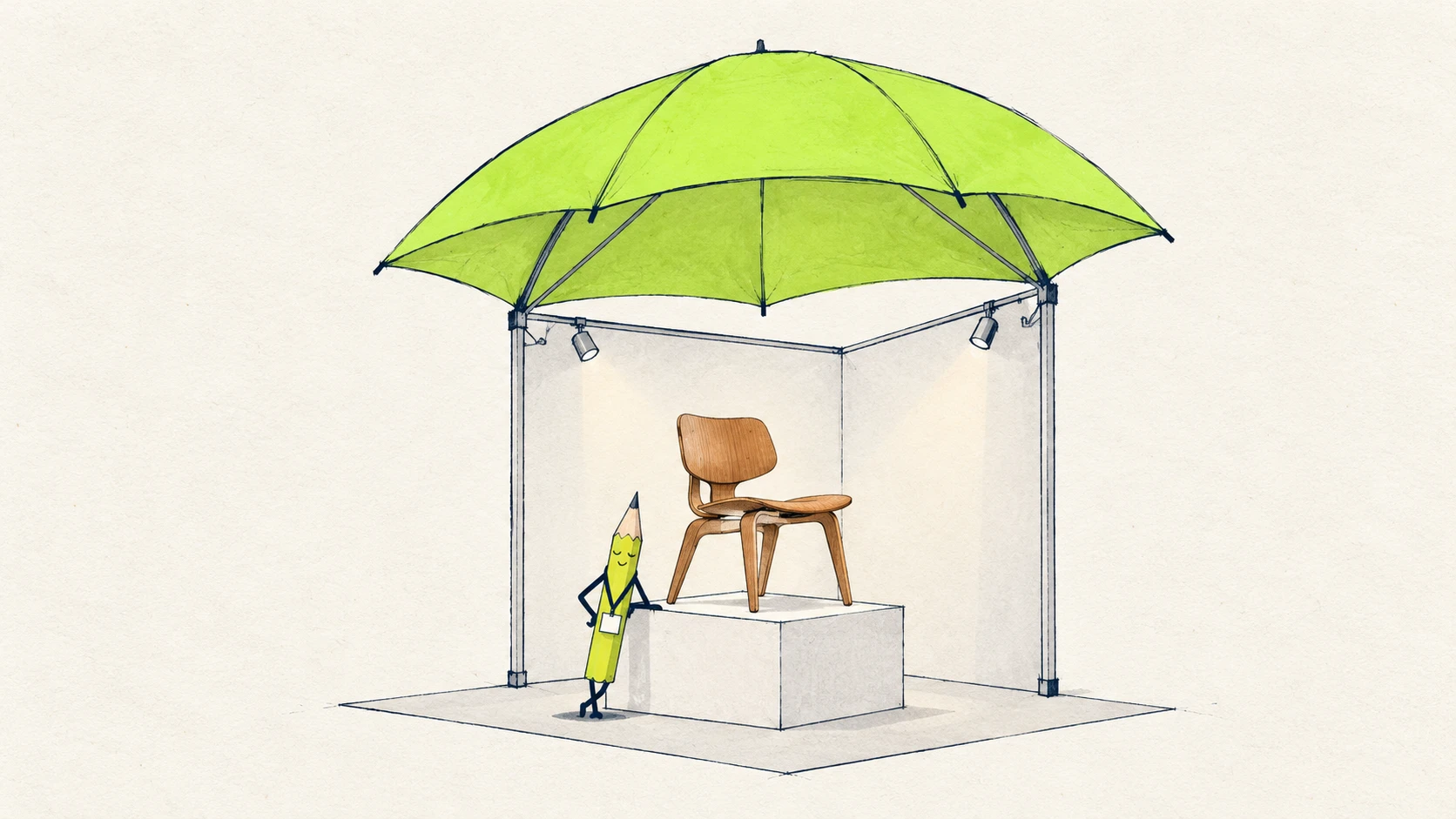
Before committing to an exhibition, I believe every company investing in original design should ask the organiser one simple question:
“How will you handle concerns about copying?”
Exhibitions are important to our industry. They bring people together, introduce new ideas and create opportunities for designers, manufacturers, dealers and educators to connect.
But exhibiting represents a substantial commitment. Beyond the stand fee are transport, staffing, travel, preparation and time away from the business. For companies showcasing original products, that investment comes after the work of developing those products in the first place.
It is reasonable to ask what support an organiser provides for the original thinking its event puts on display.
Ask before you commit
My suggestion is straightforward: make the organiser’s policy part of your booking conversation.
Ask for it alongside the floor plan, exhibitor terms and visitor information. Find out how concerns can be raised and what happens next.
The time to understand that process is before you book, rather than when you are standing on an exhibition floor with a concern and no clear person to speak to.
This does not need to be a confrontational conversation. It is a practical question from an exhibitor deciding where to invest.
Look beyond the statement
A statement supporting original design is welcome. What matters is whether there is a workable process behind it.
Who receives a concern? What evidence is needed? Can an issue be raised before the exhibition opens? What action is available under the organiser’s terms?
Before you book, ask…
- Where can we read your policy on copying and intellectual property concerns?
- Does it form part of the exhibitor terms?
- Who handles concerns before and during the event?
- What evidence is required?
- How is each party given an opportunity to respond?
- What action can you take, and within what timeframe?
The answers should give exhibitors a clear understanding of the organiser’s role, including its limits.
Originality and fairness belong together
Championing original design also means being responsible in how we discuss concerns.
Similarity alone does not establish copying. Products may share features for different reasons, and an allegation should not automatically lead to a product or exhibitor being removed.
A credible process takes concerns seriously, considers evidence and gives each party a fair opportunity to respond. It should also recognise when an issue requires specialist advice or a legal route.
I would not expect an exhibition organiser to resolve every design dispute. I would expect it to explain how concerns are handled, what its terms allow and who is accountable for the response.
Clarity benefits everyone involved.
Make it a routine expectation
One exhibitor asking for a policy can start a conversation. Many exhibitors asking the same question can help establish an industry expectation.
Organisers already explain their approach to stand safety, access and event operations. The handling of copying concerns deserves a clear place in that information.
As exhibitors, we can help bring it into focus by asking consistently and considering the answers when choosing where to exhibit.
Where organisers provide a clear, fair and accessible process, we should recognise that work. Where the response is vague, we should ask what will improve.
The purpose is to encourage exhibitions to become better environments for the people investing in new ideas.
A request for your next exhibition enquiry
You do not need a lengthy letter. A short request is enough:
“Before we confirm our participation, please share your policy on copying and intellectual property concerns, together with the process for raising a concern before or during the event. We would also appreciate details of the evidence required, the opportunity for each party to respond and any action available under your exhibitor terms.”
For EDIC, this is a practical step towards a stronger culture of design integrity.
Original design takes commitment. The events that showcase it have an opportunity to demonstrate their commitment too.