
Mike Prendergast
Design Director and co-founder, Muzo
Yorkshire roots. Original furniture design for education spaces worldwide.
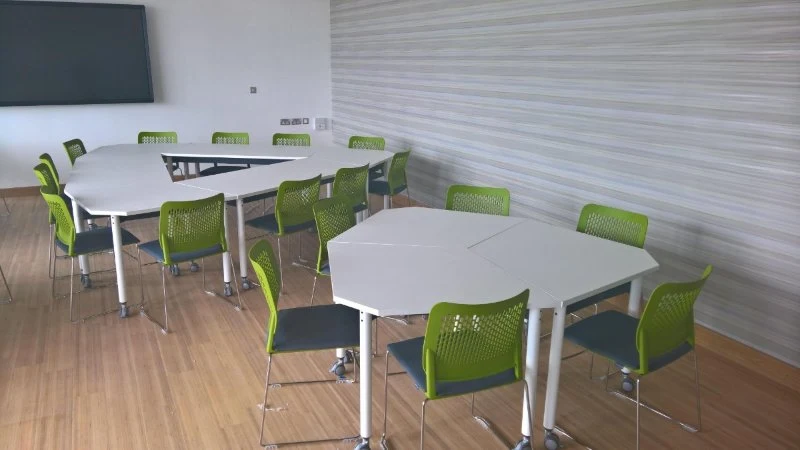
Design Director and co-founder of Muzo, Mike Prendergast’s roots are in Yorkshire, UK. His work has helped shape the company’s approach to original furniture design, combining practical engineering with an understanding of how people use a space.
Kite, the folding table system he designed, began with a challenge familiar to anyone managing a meeting or training room: how to make furniture easy to move, reconfigure and store without compromising stability.
But its possibilities soon extended beyond the conference room.
From meeting rooms to learning spaces
The qualities that made Kite useful for meetings also made it a sought-after solution in schools. Teachers needed spaces that could change throughout the day, supporting whole-class teaching, small-group activities and independent work.
Kite’s mobility and choice of tabletop shapes gave schools more freedom to organise those spaces. Tables could be brought together, moved apart or folded away when the room needed to serve a different purpose.
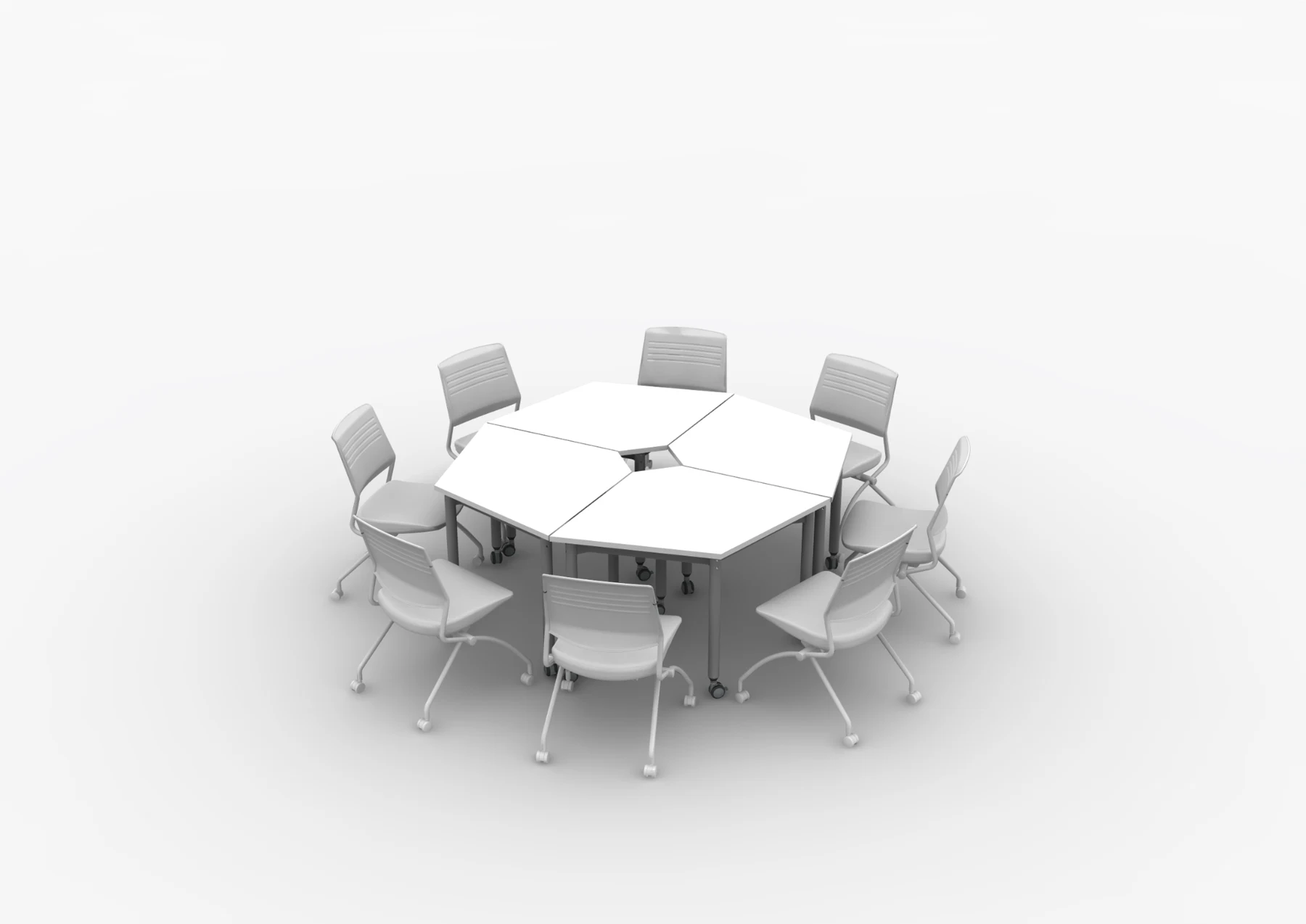
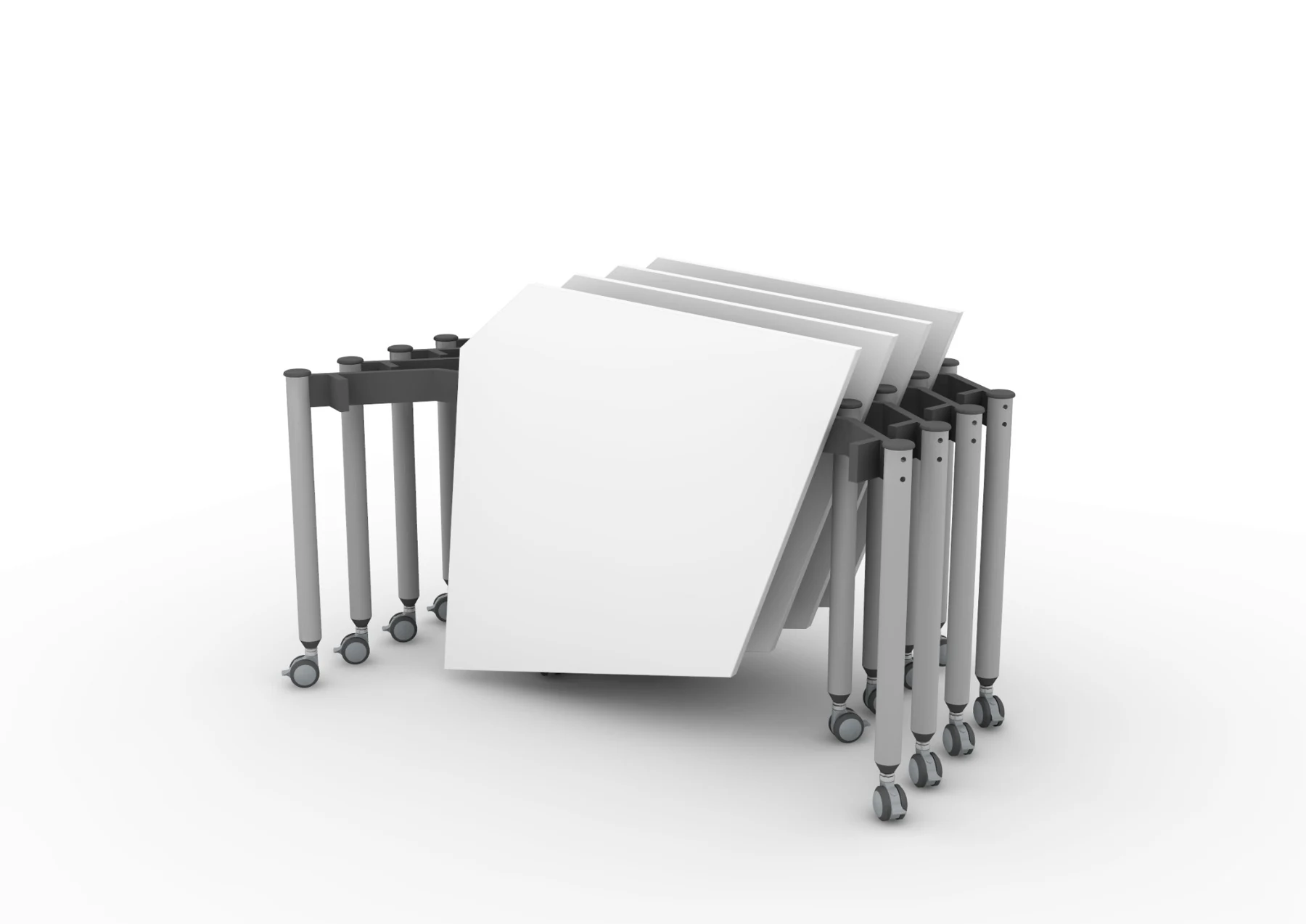
As its use in education grew, a new requirement emerged. Some classrooms wanted the versatility of Kite, but had little need for the folding function. Their priorities were different working heights, a wider choice of shapes and furniture that could accommodate more varied activities.
That demand became the starting point for Versatilis.
Removing a restriction, opening up possibilities
A folding table has to work within the requirements of its mechanism. The relationship between the frame, legs and tabletop must allow it to fold, move and nest correctly.
Removing that requirement gave Mike greater freedom to develop the design.
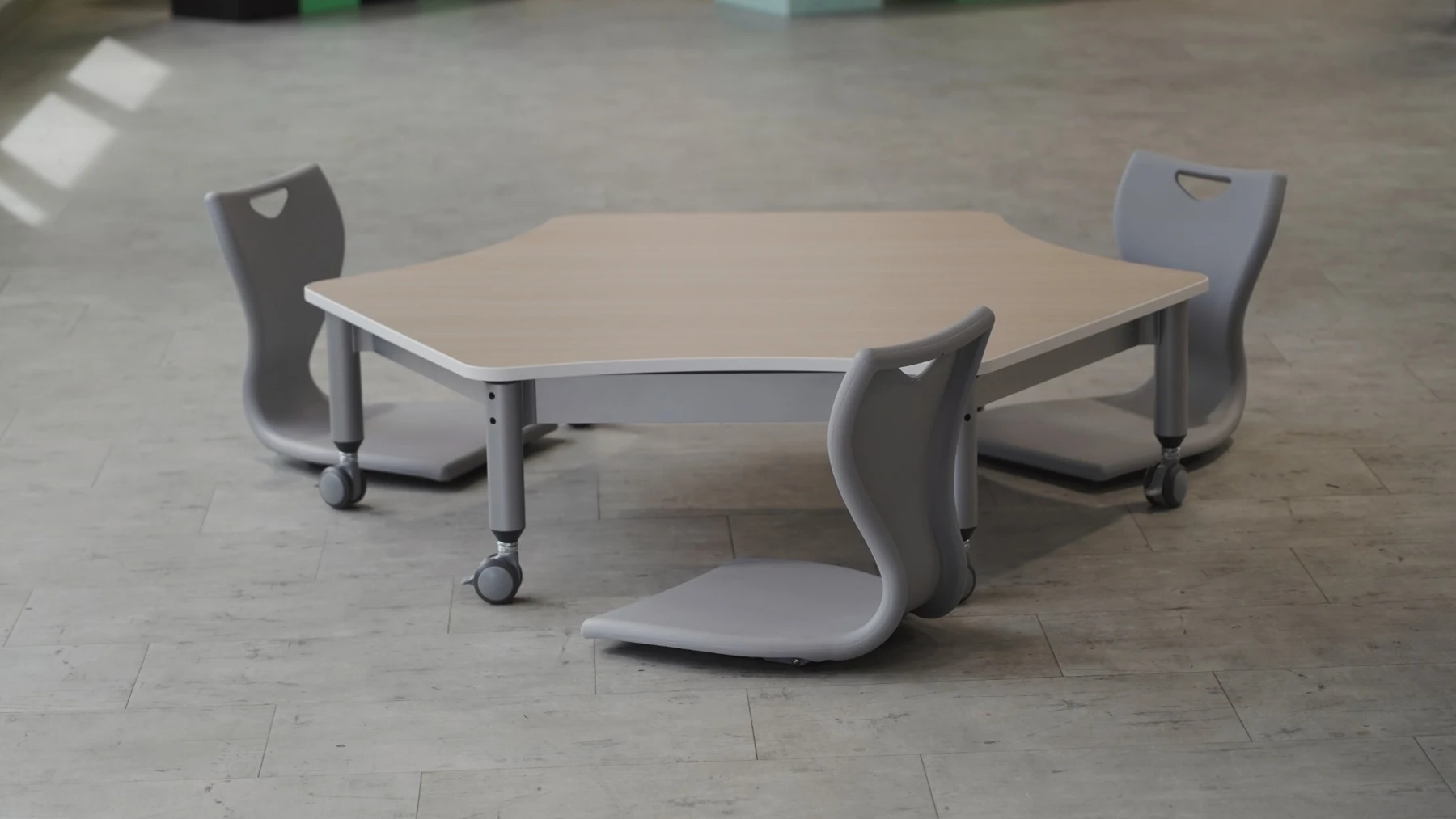
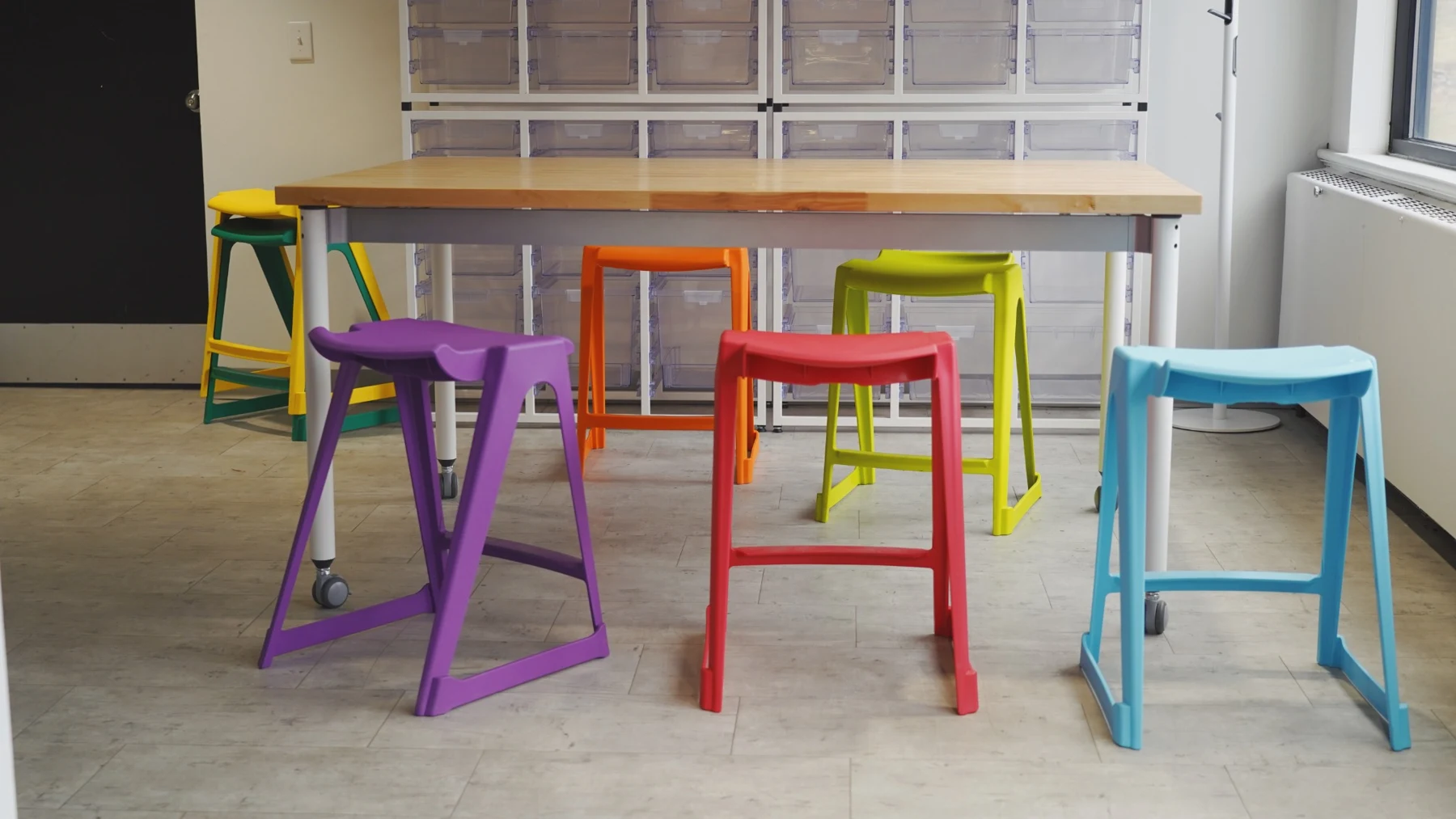
With Versatilis, the fixed frame opened up more possibilities for tabletop shapes, dimensions and working heights. The question became less about how a table would fold away and more about what learners needed it to do.
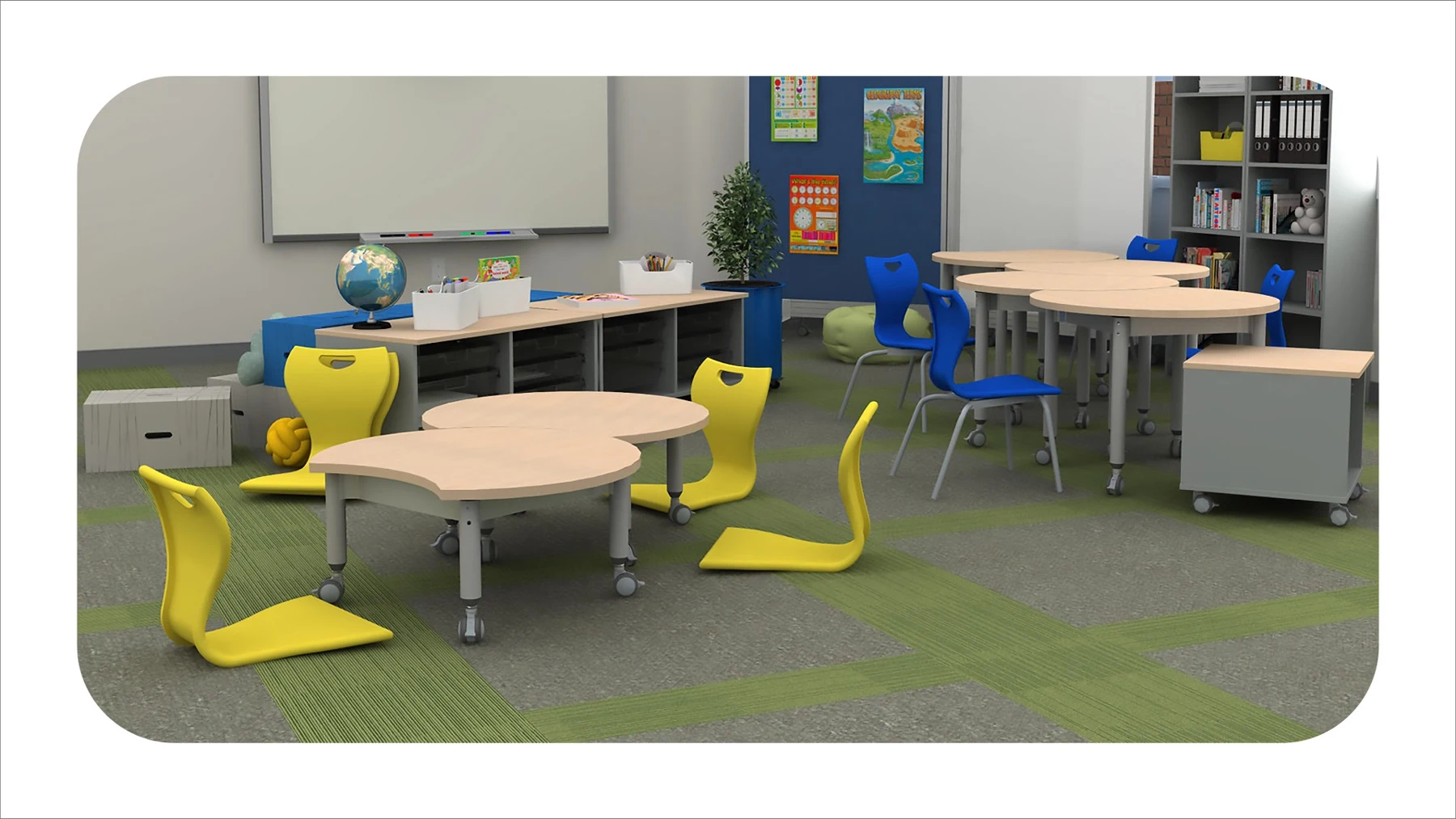
Lower tables could support younger children. Seated working heights could accommodate everyday classroom activities. Taller surfaces could create opportunities for standing work, practical tasks and informal collaboration.
A wider choice of shapes also allowed tables to respond more closely to the activity and the space, rather than asking every classroom to work around the same furniture.
Designed around the classroom
Versatilis carried forward the practical thinking behind Kite while responding to a different set of needs.
Mobility still mattered. So did stability and durability. But a classroom could now bring together different heights, shapes and sizes within one table system, creating more choice in how students worked and participated.
This was more than removing a folding mechanism. It was recognising that a feature valuable in one setting could become a restriction in another, then developing the design accordingly.
Original thinking that keeps moving
The journey from Kite to Versatilis illustrates how original design develops through use.
One product solves a practical problem. People discover new ways to use it. Their experience reveals further opportunities, and the designer responds.
For EDIC, that is a story worth championing: the observation, expertise and development behind furniture that gives educators and learners more possibilities.
Behind both Kite and Versatilis is Mike Prendergast, a Yorkshire designer whose ideas continue to shape learning spaces worldwide.